

13 days/12 nights, Mainland and the Islands
DIVE HOPPING - ECUADOR
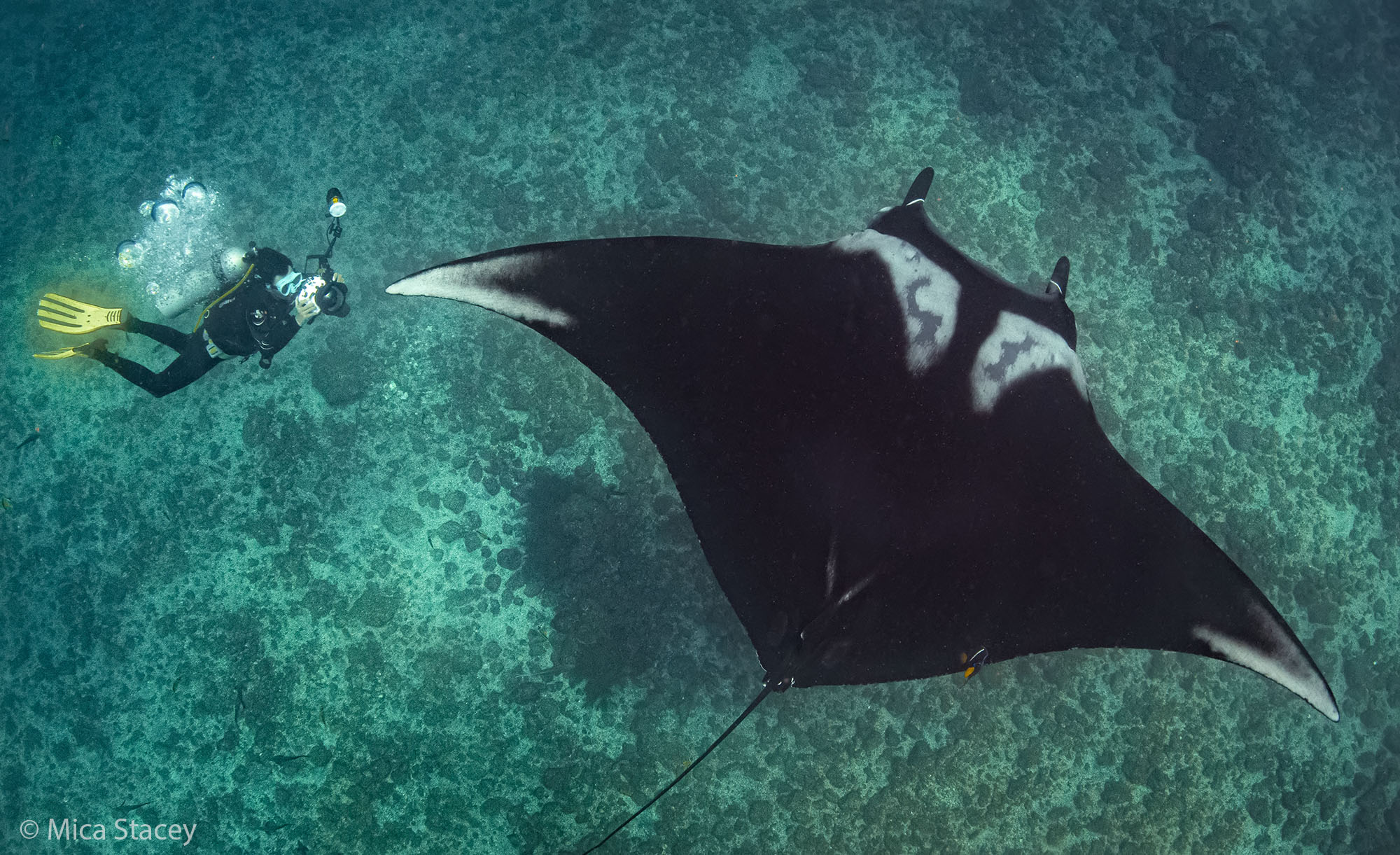
Experience Ecuador as an exceptional diving destination, and combine day trips from Ecuador’s mainland coast as well as from various islands in the Galápagos Archipelago.
If you wish to explore not only the Galápagos Islands but Ecuador as an outstanding diving destination, this program is the right choice for you, and we would be delighted to accompany you on this journey.
The Galápagos Islands are a diving paradise with world-famous sites such as Gordon Rocks, Kicker Rock, and the islands of Darwin and Wolf. Less known are the dive sites along the , such as Isla de la Plata near the small coastal town of Puerto Lopez, where a visit—especially during the cold season from June to September—offers outstanding opportunities to dive with giant manta rays and observe humpback whales - an incredible experience that seems to be unique in terms of the concentration of these creatures. Thanks to the Mantas Ecuador Foundation, we know that Ecuador is home to the world’s largest manta ray population: it is estimated that there are two populations along the mainland coast and one in the Galápagos Archipelago, totaling more than 4,000 animals—a figure that exceeds the populations in other habitats worldwide by a factor of ten. An absolute superlative thanks to the mighty Humboldt Current, the lifeline of biodiversity, which you now follow on your journey to the Galápagos.
José Solis, our mainland partner
José Solis, with whom we collaborate on our Dive-Hopping Ecuador program, is a first-generation diving instructor at Scuba Iguana and remains a close friend and confidant to this day. He opened his dive center in Puerto Lopez as early as 1997. As General Manager of Exploramar, a PADI Master Scuba Diver Trainer (MSDT), PADI Freediving Instructor, Galapagos Marine Reserve Guide, and much more, he and his team share our passion for Ecuador’s nature and use it to provide guests with amazing wildlife sightings and travel experiences.
Ideally, the arrival at the Galapagos archipelago is on the island of San Cristobal. Its town Puerto Baquerizo Moreno is the political capital of the province and second in importance to Puerto Ayora, Santa Cruz Island, when it comes to tourism. San Cristobal is the starting point for , first of all to the imposing Kicker Rock, a sheer-walled tuff cone that has been eroded into two halves which is known for its schools of hammerheads. Also available are the Whale Rock and Gardner Bay off the coast of Espanola Island.
Our partner dive centers on San Cristobal
On San Cristobal Island, we work with trusted partner dive centers with whom we have been working for many years and to whom we are very grateful for their excellent cooperation, as it enables us to offer this extended diving experience within the archipelago.
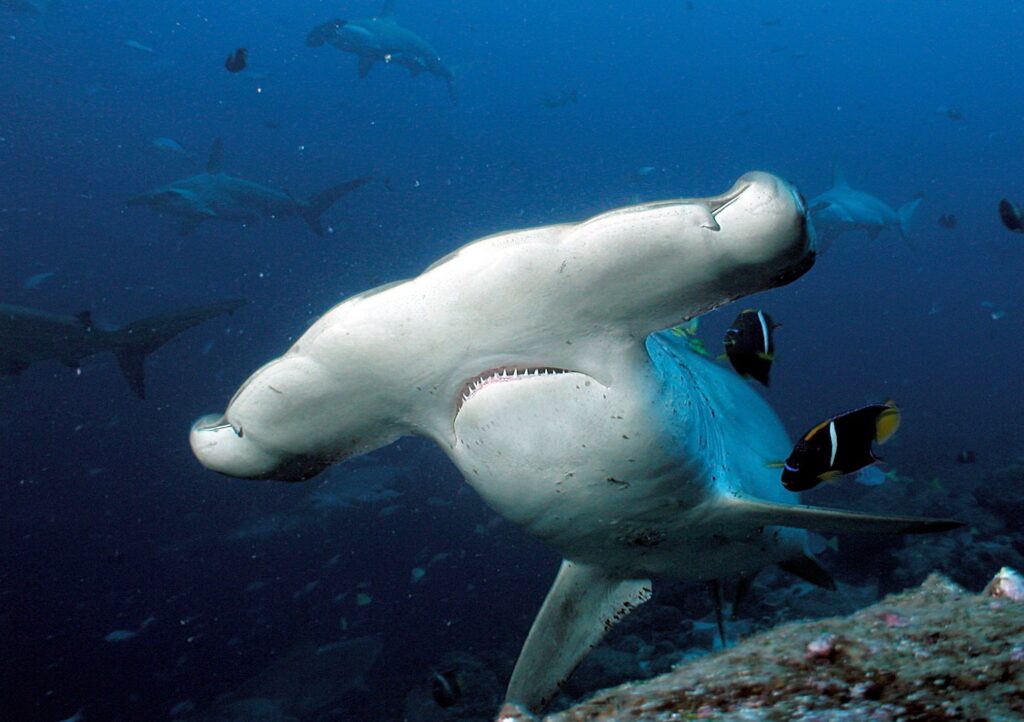
The final leg of this journey takes you by speedboat ferry to Santa Cruz Island. It is home to our dive center, Scuba Iguana, and the hub of the islands. Its central location makes it the ideal starting point for exploring a wide variety of dive sites such as Gordon Rocks, North Seymour, Mosquera, Daphne, Bartolome, Cousins Rock, and Floreana. Hammerhead sharks, Galápagos sharks, reef sharks, eagle rays, golden cow-nose rays, Galápagos sea lions, green sea turtles, schools of endemic Salema fish—the list of wildlife sightings in the Galápagos Marine Reserve is very long and is sure to delight you. Our motivated and knowledgeable crew is looking forward to meeting you! Are you ready for this amazing diving trip?
Day 1
ARRIVAL IN ECUADOR, TRANSFER TO PUERTO LOPEZ
Please fly into the port city of Guayaquil (GYE), where your private driver will meet you in the airport arrivals hall. Pickup is available 24 hours a day. The drive takes about 3 hours south to Puerto Lopez. The rest of the arrival day is free to settle in. Check into your hotel right near the beach and enjoy the fresh sea air and local cuisine. Accommodations in Puerto Lopez range from simple hostels to solid 3-star mid-range hotels. The small town does not offer superior hotels and luxury can only be found in nature ;).
Day 2
LAND EXCURSION IN MACHALILLA NATIONAL PARK
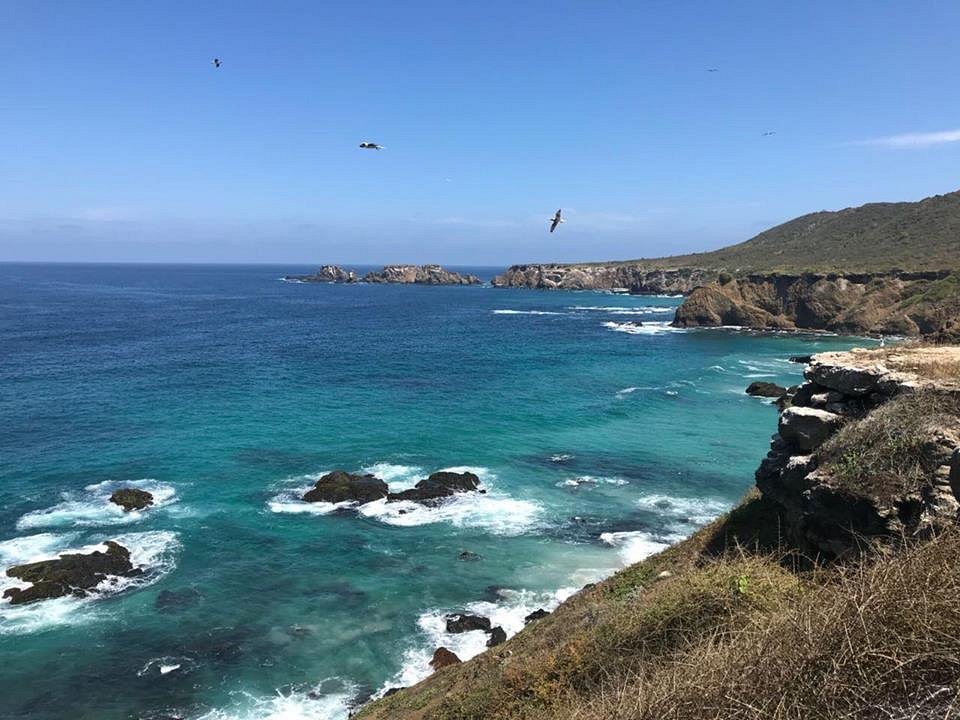
Machalilla National Park, home to the dive sites around Puerto Lopez, is also worth exploring on land. The park attracts visitors with beautiful beaches, explorations of the Ecuadorian tropical dry forest, and archaeological sites; a visit offers the perfect opportunity to familiarize yourself with the region and thus start your trip.
The tour begins in the morning with pickup from the hotel and lasts until early afternoon. The first stop is at the beach Los Frailes, which consists of three adjacent areas whose sand ranges in color from white to black. It has been recognized multiple times as one of Ecuador’s most beautiful beaches. Enjoy the walking trails and lookouts. After, you continue to the town of Agua Blanca, one of the best-preserved archaeological sites in Machalilla Park. Here you can see urns from the Manteña-Huancavilca culture and explore the tropical dry forest, home to motmots and squirrels. The tour ends at the sulfur-rich healing spring of Agua Blanca, which is prized for its medicinal and health-promoting properties.
In the afternoon, head to the dive center for equipment fitting and a briefing
Good to know
If you prefer to dive on the first day of the trip, we can also swap this land excursion for a diving tour.
Day 3+4
DIVING ALONG THE MAINLAND COAST AND AT ISLA DE LA PLATA
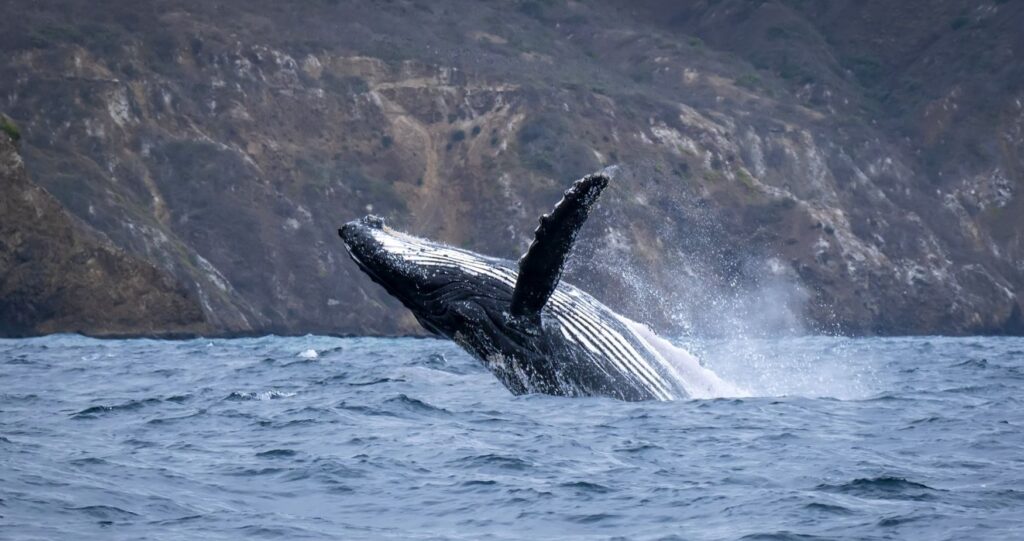
Discover the rich underwater world off the coast of Ecuador with two dives per day. Tropical fish such as parrotfish, angelfish, puffers, damselfish, and surgeonfish, green sea turtles, morays, octopus, and corals can be expected year-round, and during the peak season from June to September, the stars of the region show up: giant manta rays with wingspans of several meters. A sunfish may also swim by during this time, as they too appreciate the cold waters of the Humboldt Current. Another highlight of this season is the humpback whales that gather in large numbers in this region year after year. With a bit of luck, you’ll not only see them breaching but also hear them singing.
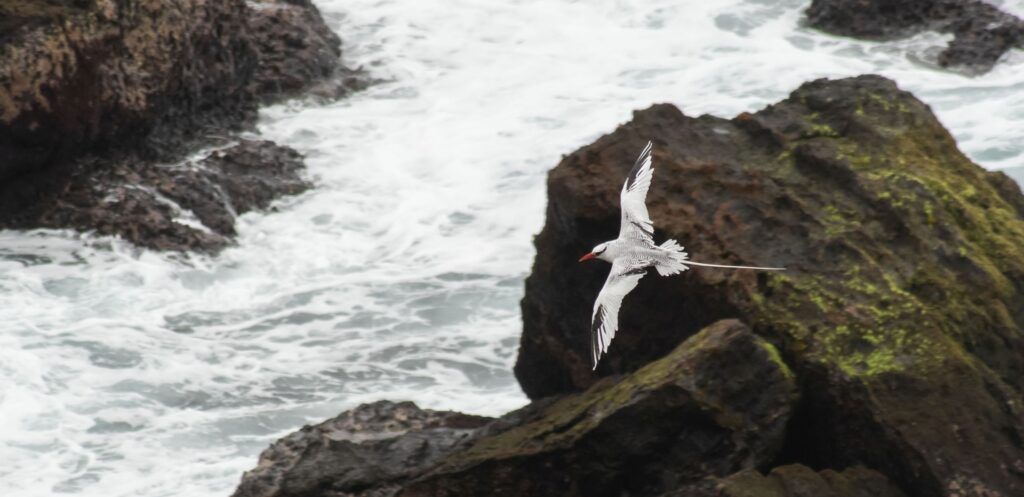
Depending on your interests and availability, we can integrate a shore excursion to Isla de la Plata in one of the diving tours. The island is an outstanding spot for birdwatching, and as the island’s nickname “Little Galapagos” suggests, the biological connection to the archipelago is evident: Blue-footed, red-footed, and Nazca boobies, frigate birds, pelicans, and many other birds live here.
Day 5
ONWARD JOURNEY TO THE GÁLAPAGOS ISLANDS - VISITOR SITES AROUND PUERTO BAQUERIZO MORENO
Today it’s time to move on; the transfer to Guayaquil is very early, since flights to the Galápagos only depart in the morning and enough time must be planned for baggage screening (biosecurity) and check-in.
Ideally, the Galapagos portion of your trip begins on San Cristobal Island. Please discuss any changes to the itinerary with your sales agent.
Upon your arrival at San Cristóbal Airport (SCY), your driver will be waiting for you outside the arrivals hall and will take you to the hotel.
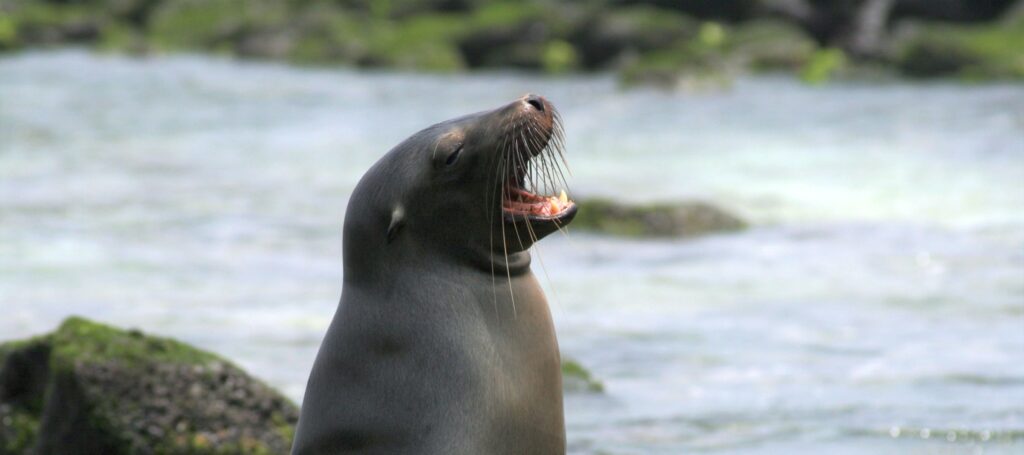
The rest of the day is yours to enjoy at your leisure. Take a stroll along the promenade and enjoy the fresh sea air. If you’d like to start exploring right away, we recommend a walk to La Lobería Beach to watch Galápagos sea lions—the island’s iconic symbol—lazing on the lava rocks and in the sand. The beach is about a 30-minute walk south of town. On your way to the beach, keep an eye out for marine iguanas, yellow-throated warblers, finches, and the great frigatebird.
Another destination that does not require much planning or guidance is the Frigatebird Hill (Cerro Tijereta) northwest of town. We recommended starting the walk up from the Interpretation Center, following the trail for approx. 1 hour through a mixed forest of incense trees, matazarno trees, candelabra cactus, and yellow-flowered cordia. You´ll see dozens of great frigate birds sitting or nesting in the trees, yellow warblers, pelicans, the island’s species of lava lizards and mockingbirds specific to San Cristobal, and different species of finches. You´ll have fantastic panoramic views from different viewpoints up to Kicker Rock and over the town of Puerto Baquerizo Moreno. Snorkel fans should carry their equipment to explore the bay.
Please keep in mind that sunset is around 6:00 p.m. and there is no long twilight at the equator. It is dark by 6:30. Find a nice place to enjoy the sunset over the sea.
Day 6
KICKER ROCK DIVING TOUR
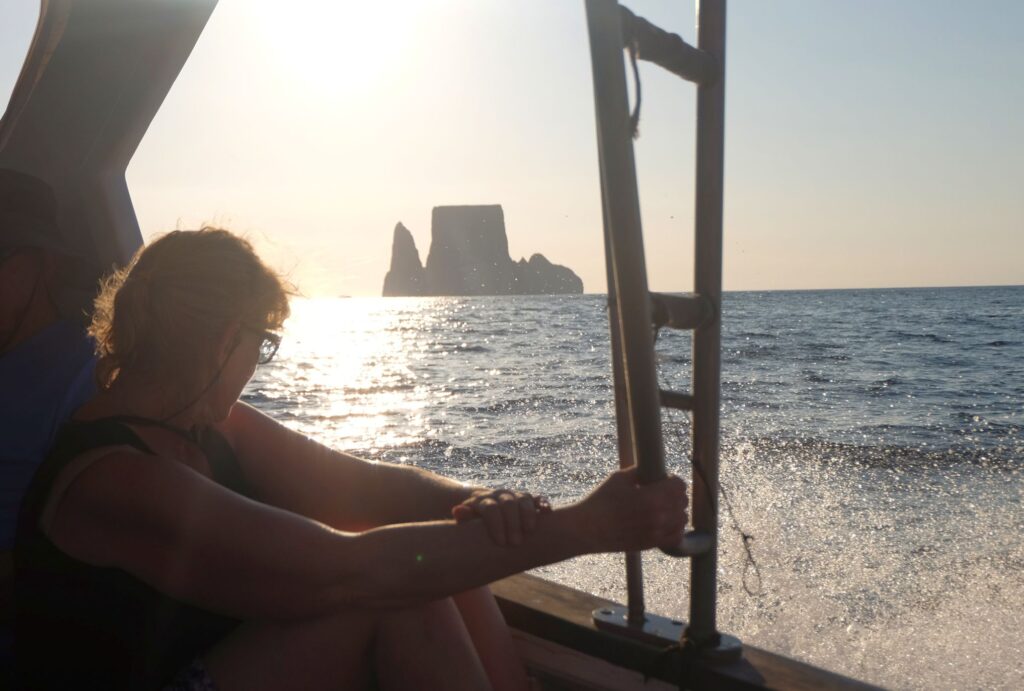
Kicker Rock is an imposing, vertical, sheer-walled tuff cone that has been eroded into two halves. It is about 45 minutes by boat from town. The name in Spanish is León Dormido, so called because of its resemblance to a sleeping sea lion. It is known as one of the best dive sites in the archipelago to expect schools of hammerhead sharks, Galápagos sharks, sea turtles, eagle rays, golden rays, sea lions as well as schools of Salema fish.
The tour starts around 08:00 a.m. with meeting the dive guide at the main dock. You get straight onto the boat, and the trip to Kicker Rock takes about 45 minutes. A brief equipment and weight check precedes the actual dives. Your guide will explain the course of the dive.
The first dive is at the outside wall of the rock that goes 60m/200ft straight to the bottom – good buoyancy control for divers is a must (divers go down to 20m). Currents are mild to moderate. After the surface interval with snacks and drinks, the second dive goes through the dramatic channel cutting through the rock between towering walls. The divers go up from 20m/60ft to 15-13m/40ft.
After the action-packed dives, you have a delicious hot lunch and head to a nearby beach to relax, which varies depending on the day of the week and the operator.
Around 03:30 PM, you will be back in Puerto Baquerizo Moreno.
Day 7
ESPAÑOLA ISLAND TOUR – WALKING AND DIVING
The tour to Española starts quite early, depending on the operator already at 06:30 a.m. The quite long (2 hours) and sometimes choppy boat ride is worth it from the moment you arrive at Punta Suárez. You will see the endemic green-reddish marine iguanas and the Galápagos sea lions already at the small stone pier, constructed for a dry landing with the zodiac. The hiking trail is 1.6 km long, a sandy and fairly flat circular trail that shows you many endemic species as e.g. the Española mockingbird, and the Galápagos hawk. Different species of finches, blue-footed boobies, and Nazca boobies can be spotted.
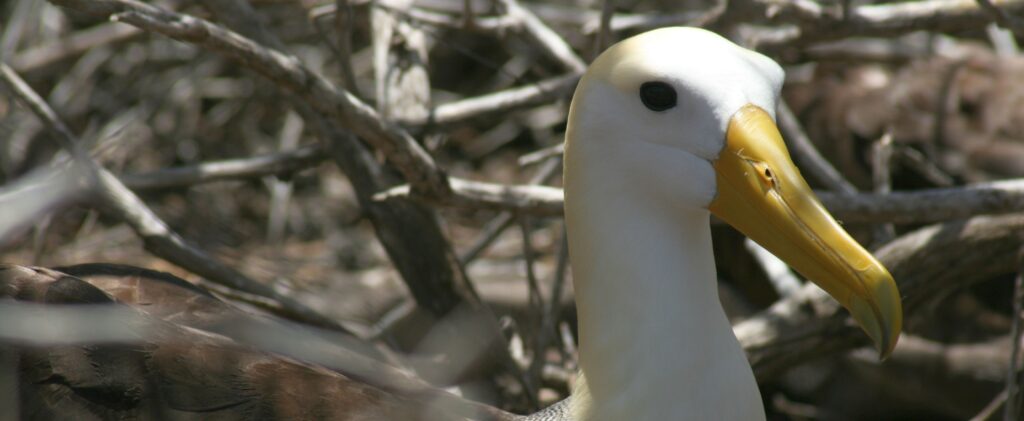
Nesting season for the waved albatross from April to December is especially fantastic. They mate, nest and raise their chicks only on Española Island, touching no other land despite ocean-crossing flights.
Another highlight on the way is El Soplador, a 25m water fountain produced by ocean waves hitting with great pressure the cracks in the island´s cliff, spouting up through a lava tunnel.
After lunch, you navigate to Gardner Bay for diving or snorkeling. Gardner Bay is a shallow area between Islet Gardner and Islet Osborn. It is just a small protuberance, which is the starting point for the dives. Currents may be strong and the visibility good. The site offers a lot of activity in general: eagle rays, golden rays, barracudas, the Galapagos batfish, sea turtles, sea lions, white-tipped sharks, Galápagos sharks and sometimes even hammerhead sharks!
The tour ends at approx. 05:00 p.m. with disembarking at the main dock of Puerto Baquerizo Moreno
Day 8
FERRY CROSSING TO SANTA CRUZ ISLAND/ HIGHLAND VISIT
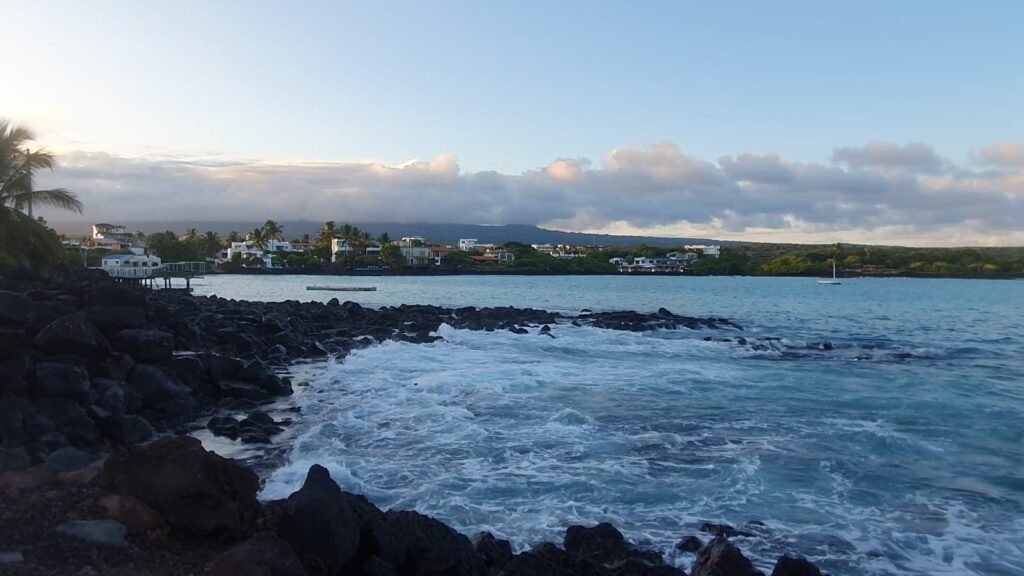
Today, we continue our journey with the speedboat ferry to Santa Cruz Island. Pickup from the hotel is early, around 6:20 AM, and arrival on Santa Cruz is around 9:00 AM. Your driver will pick you up at the pier and take you to the hotel. Check into your room and enjoy a moment of rest or a cup of coffee before your Naturalist guide picks you up around 10:00 AM to head off through the different microclimate zones into the highlands of Santa Cruz Island.
The highlands are mostly cloudy, and rainfalls are not uncommon. This is reflected in the lush, green vegetation that contrasts with the dry coastline. Cool air with high humidity provides a nice respite from the heat down in Puerto Ayora.
The first stop is at the twin craters “Los Gemelos”. These collapsed twin craters were formed when the island was still an active volcano. The area is one of the few where the endemic Scalesia forest is almost intact. Some finch species and the Galapagos dove live here.
Afterwards you continue your way to one of the ranches where you see the Galapagos giant tortoises in their natural habitat. The tortoises do not live there in a fenced area, but ponds in the pastures attract them so that visitors can get a good look at them. A pleasure for people and for animals that can leave the enclosure at any time to continue on their way. Enjoy a delicious lunch and watch the turtles wandering around you from the restaurant’s terrace.
The area where the turtles live is crisscrossed with underground lava tunnels. These tunnels are formed in the heart of huge lava flows and show you the violence of magma as if frozen in time. With a bit of luck you will see a sleeping Galapagos owl, appreciating the deep shadows of the tunnels. Occasionally we also see the endemic pintail duck as well as coots.
After the tour, your driver will first drop you off at the dive center so you can try on your gear and attend a quick briefing. Afterward, you’ll head to the hotel.
Day 9+10+11
SANTA CRUZ DIVING TOURS
Hammerhead sharks, Galapagos sharks, manta rays, eagle rays, golden rays, sea turtles and sea lions - float among these and many other majestic creatures on 2 dives per day. Our professional crew will guide you through the day with information and best service above and under water.
The group meets at the dive center at 7:15 AM to start the tour. The exact dive sites and corresponding logistics depend on your travel dates, as each operator in the archipelago has an itinerary and schedule set by the Galápagos National Park. If your diving experience does not match the offered dive spots, the program will be adjusted accordingly in its order of the activities. Depending on the dive site, you will be back at the hotel around 3 - 4 o'clock.
Day 12
WIND DOWN // TORTUGA BAY, CHARLES DARWIN RESEARCH STATION
The last day is yours to enjoy as you wish—to relax, reflect on the wonderful experiences of the past few days, and, if applicable, dry your personal dive gear.
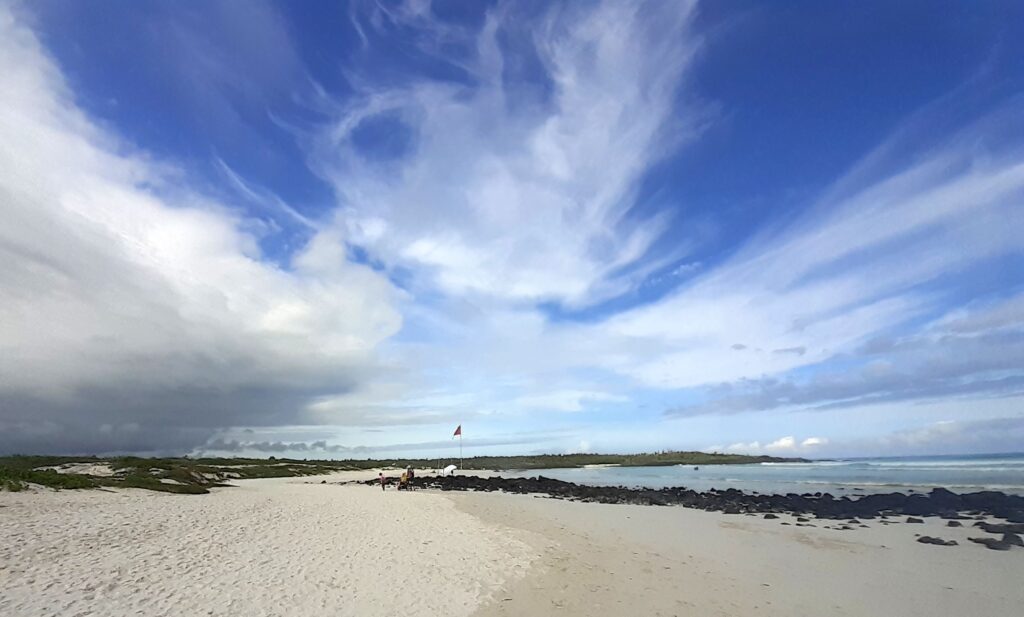
You might want to conclude your stay with a walk to the beautiful Tortuga Bay beach, an 800-meter-long sandy beach good for watching wading birds, marine iguanas, and sea lions. An informative visit to the Charles Darwin Research Station, with its breeding station for Galápagos giant tortoises, might also be something you like to add to this last day.
A visit to Tortuga Bay beach is free of charge, at the research station you have to pay USD 10 per person on-site for a group tour (mandatory).
All visitor sites, as part of the National Park, close around 5:00 pm.
Day 13
DEPARTURE
It is time to say goodbye. Your driver will pick you up at your hotel 3 1/2 hours before departure and accompanies you to Baltra Airport (GPS). Most flights depart in the morning, which usually does not allow for further activities on the day of departure.
What’s included in our Packages?

- 12 nights accommodation with breakfast
- 8 full-day excursions and 1 half-day excursion to rich wildlife destinations
- Professional and bilingual (Spanish/English) guidance on all tours: PADI instructors for the diving tours and naturalist guides for the land and snorkel excursions.
- 13 dives on 7 tours with complete dive gear
- Towel service
- Lunch, snacks and beverages on all tours
- All transfers (airport hotel/ harbour hotel)
- All transfers (airport hotel/ harbour hotel)
- Taxes
- Credit card fees
- International Airfare
- Airfare Galapagos Quito/Guayaquil
- National Park Galapagos entrance fee
- Transition Control Card (TCT)
- Dinner
- Dive Computer (not mandatory for day diving tours, all regulators come with a pressure and a depth gauge, the dive guide measures the bottom time, temperature etc. for the group)
- Tips
Pricing
Package Price
Standard
From $3,195 /pp
Single supplement: $590
Comfort
From $3,560 /pp
Single supplement: $1100
Superior
From $3895 /pp
Single supplement: $1,595
*Main prices based on 2 travelers in a double room (1 or 2 beds), including taxes and credit card fees
Good to know
We hope this program is exactly what you are looking for but, if you want to change a thing or two, no problem! We are happy to individualise this program, just ask!

Frequently asked questions
Meet our sales team
All locals, all divers and with many years of experience in the tourism business in Galapagos.
-

Lisa
Sales Agent
-

Jessica
Sales Agent
-

Sabine
Sales Agent
-

Virginia
Sales Agent